
Most architecture firms are sitting on a significant tax credit, and don’t even know it.
If your firm designs buildings that push boundaries, solves technical challenges, or develops new approaches to structure, energy performance, or materials, there’s a strong chance your everyday project work qualifies for the federal R&D Tax Credit. And if you haven’t been claiming it, you may be leaving real money on the table.
What Is the R&D Tax Credit?
The Research and Development (R&D) Tax Credit was created by Congress to reward American businesses that invest in innovation. Originally a temporary measure, it was made permanent in 2015 as part of the PATH Act.
For qualifying businesses, the credit reduces federal (and often state) income tax liability dollar-for-dollar. That’s not a deduction, it’s a direct reduction in the taxes you owe. For many architecture firms, the annual credit can reach tens or even hundreds of thousands of dollars, with the opportunity to amend prior tax years and recover credits going back three years.
Why Architecture Firms Often Qualify
There’s a common misconception that R&D tax credits are reserved for pharmaceutical companies, tech startups, or manufacturers in lab coats. In reality, the IRS defines “qualified research” in a way that captures a wide range of professional activity, including the kind of technical problem-solving that architects do every day.
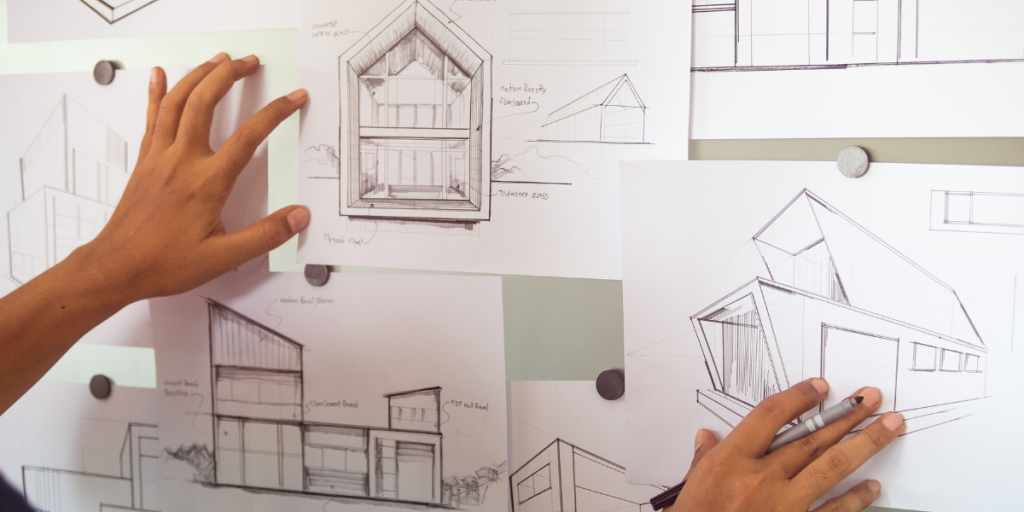
Architecture is an inherently iterative, experimental discipline. Firms regularly develop new structural solutions, test unfamiliar materials, model energy performance scenarios, and design building systems that have never been built in quite that configuration before. That process (identifying a technical challenge, developing possible approaches, and testing whether they work) is exactly what the IRS is looking to reward.
The Four-Part Test: Does Your Work Qualify?
To qualify for the R&D Tax Credit, activities must meet four criteria established by the IRS:
1. Business Component: The activity must relate to the development or improvement of a product, process, formula, invention, or software. For architecture firms, this includes building design, structural systems, façade engineering, mechanical and energy systems, and more.
2. Technical Uncertainty: There must be genuine technical uncertainty involved, meaning the solution isn’t obvious, and the outcome isn’t known at the outset. When your engineers are working through whether a design will perform as intended, that uncertainty is a qualifying signal.
3. Process of Experimentation: The firm must engage in a systematic process to evaluate alternatives, whether through physical testing, modeling, simulation, or iterative design refinement. BIM modeling, prototype analysis, and design development cycles all fit this definition.
4. Technological in Nature: The work must rely on principles of the physical sciences, engineering, computer science, or biology. Structural analysis, thermal modeling, building envelope design, and computational design all qualify here.
What Activities Commonly Qualify?
Architecture firms often overlook how much of their standard project workflow meets the four-part test. Common qualifying activities include:
- Novel structural systems: developing new approaches to spanning, support, or lateral stability
- Energy performance modeling: iterative analysis to achieve energy efficiency targets beyond code minimums
- Building envelope design: testing new materials, cladding systems, or façade configurations
- MEP integration: coordinating mechanical, electrical, and plumbing systems in technically complex or constrained conditions
- Sustainable design: developing passive systems, net-zero strategies, or LEED-targeted solutions
- Computational and parametric design: using algorithms or scripts to evaluate design options
- Historic preservation with engineering challenges: adapting existing structures for new uses while meeting modern codes
- Custom fabrication detailing: developing new construction details or assemblies without established precedent
The key distinction is that purely aesthetic or administrative work doesn’t qualify, but the technical investigation underlying most architectural work often does.
What Expenses Are Included?
Once qualifying activities are identified, the credit is calculated based on three categories of Qualified Research Expenses (QREs):
- Wages: Salaries paid to employees directly engaged in or supervising qualifying research activities (typically architects, engineers, and technical staff)
- Supplies: Materials consumed during the research process, such as physical models, prototypes, or testing materials
- Contract Research: 65% of amounts paid to third-party contractors performing qualified research on your behalf
For most architecture firms, wages represent the largest share of QREs, which makes the credit particularly valuable — your people are your primary asset, and their time spent on qualifying work generates the credit.
How the Credit Is Calculated
There are two methods for calculating the R&D Tax Credit:
Regular Credit Method: Generally equals 20% of qualified research expenses above a calculated base amount. This method can yield higher credits but requires more historical data.
Alternative Simplified Credit (ASC): Equals 14% of QREs above 50% of the average QREs for the three prior tax years. For firms without complete historical records, this is often the more practical approach.
For architecture firms, the credit typically equates to roughly 6–8% of total qualified wages and supply costs. On a firm with $2 million in qualifying payroll, that could represent $120,000–$160,000 in annual tax credits.
Amended Returns: You Can Still Claim Prior Years
If your firm hasn’t been claiming the R&D Tax Credit, you’re not necessarily out of luck. The IRS generally allows taxpayers to amend returns for the three prior open tax years and claim credits retroactively.
That means if your firm has been performing qualifying work for years, and most architecture firms have, there may be a meaningful sum of unclaimed credits available by filing amended returns. This is one of the most significant (and underutilized) tax recovery opportunities available to professional services firms.
Documentation Is Critical
With increased IRS scrutiny of R&D credit claims in recent years, proper documentation is not optional, it’s essential. A credible, defensible claim requires:
- A clear description of each qualifying business component and the technical uncertainty involved
- Documentation of the individuals who performed the research activities and what they sought to discover
- Time-tracking records or allocation methodology supporting wage calculations
- Project files, design logs, model iterations, or other contemporaneous evidence of the experimental process
Working with a firm that understands both the technical nature of architecture and the tax law requirements is the best way to ensure your credit is both maximized and defensible.
Why Partner with CSSI?
CSSI has spent more than 23 years helping professional services firms, including architecture and engineering practices, identify, calculate, and document R&D Tax Credits that hold up under scrutiny.
Our approach is engineering-based and compliance-first. We don’t chase aggressive numbers that create audit risk. We identify what genuinely qualifies, build documentation that supports the claim, and deliver credits that are both meaningful and defensible.
With over 60,000 completed studies, CSSI brings the experience and rigor your firm deserves.
Ready to Find Out What Your Firm Could Recover?
A free analysis is the easiest way to understand whether your architecture firm qualifies and what a potential credit might look like. There’s no commitment, no obligation; just a clear picture of an opportunity that may already exist in the work you’re already doing.


