
Why R&D Tax Credits for Tool, Die, and Machinery Companies?
What looks like a normal day in a tool and die shop, working through a difficult geometry, adapting a die for a new material, solving a tolerance problem, is activity that meets the federal definition of qualifying research. When your team develops new tooling, refines a die design, or engineers a custom fixture or machine adaptation, those activities involve the technical experimentation and uncertainty resolution the R&D Tax Credit was built to reward. Employee wages, material costs, and contractor expenses tied to qualifying work all count, and many shops are sitting on years of uncaptured credits without realizing it.

The Harder the Job, the More Likely It Qualifies
Designing new tooling and dies, developing specialty fixtures, engineering custom machinery, and solving production-specific technical challenges all meet the criteria for the Federal R&D Tax Credit.
Qualifying Costs Are Already Running Through Your Books
Time your machinists, engineers, and technicians spend on qualifying development and testing activities, along with materials consumed in the process, contribute to your Qualified Research Expenses.
Design, Fabrication, and Testing All Feed the Calculation
New tool and die design and fabrication, prototype development and testing, process optimization, materials evaluation, machinery adaptation, fixture engineering, and cycle time reduction work are among the most commonly identified qualifying activities.
Unclaimed Credits From Prior Years Are Recoverable
Tool, die, and machinery shops that haven’t claimed the R&D credit may be able to look back and recover credits from prior open tax years depending on their situation.
Project Overview
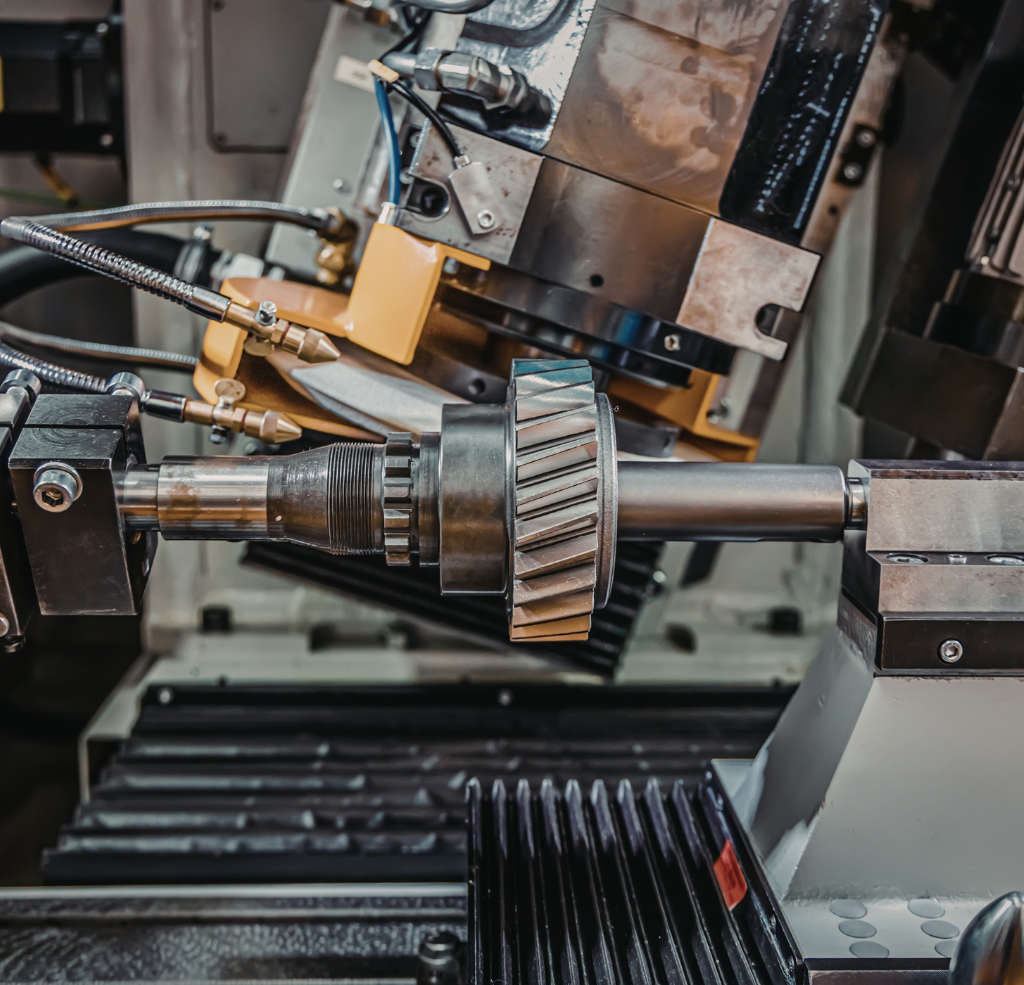
A die engineering company developed a custom progressive die for stamping ultra-high-strength steel (UHSS) structural components where standard die configurations produced unacceptable split and fracture rates at the drawn radii, rendering the process unable to meet part geometry and yield requirements. By applying for the R&D Tax Credit, this company was able to attain a Total State Credit of $58,341 and a Total Federal Credit of $174,392.
Company Type
Tool, Die, and Machinery
Employee Count
29
Employee Wages
$1,541,397
Supply Costs
$1,198,664
Total QREs
$1,995,371
Total State Credits
$58,341
Total Federal Credits
$174,392

Business Component
Developing an improved progressive die system capable of producing dimensionally compliant stampings from UHSS at acceptable scrap and tool life rates.

Elimination of Uncertainty
It was unknown whether modified draw radii, variable blank holder force profiles, and a ceramic-coated tool steel selection could suppress fracture at critical form features while achieving target tool life at production speeds.

Process of Experimentation
The team iterated on FEA forming simulations, conducted instrumented short-run stamping trials, analyzed failure modes at fracture locations, and refined die geometry and coating selection through successive trial-and-analysis cycles until scrap and tool life targets were simultaneously achieved.

Technological in Nature
Grounded in mechanical engineering, metallurgy, and tribology.
Estimate Your R&D Tax Credit Savings
Find out how much your innovation and development activities could save you on federal taxes.

How R&D Tax Credits Work
The Process is Simple:
Select your industry for accurate wage qualification rates
Enter your qualifying Research & Development expenses and gross receipts
Our calculator runs both Regular and Alternative Simplified Credit methods
See instant estimates and discover which method maximizes your benefit
What You’ll Need

Industry & Company Info
Your industry type and R&D history help us optimize your calculation method and apply the correct wage qualification rates.

Supplies & Materials
Raw materials, prototypes, and supplies consumed during research, experimentation, and development processes.

Contract Research
Amounts paid to third-party contractors conducting qualified research on your behalf (65% qualifies for the credit).

Salaries & Wages
Total compensation for all employees performing, supervising, or supporting qualified research activities.
Tax Savings Analysis
We’ll evaluate your specific circumstances and provide a detailed estimate of potential tax savings across our service offerings. Complete the form to get started or scroll down to learn more about how our analysis benefits you.
Download Your Company’s R&D Tax Credit Estimate
Equip your finance team with the data they need. Download a professional estimate to review internally and share with your tax advisors.This preliminary estimate is based on general company information and industry benchmarks. Actual results may vary depending on your company’s specific qualifying research activities, detailed financial documentation, and individual tax situation. This estimate does not constitute a formal R&D tax credit study, tax advice, or guarantee of results. Please consult with your tax professional before making any tax-related decisions.
How Does the R&D Tax Credit Study Process Work?
Getting started is straightforward. CSSI handles the assessment, interviews, calculations, and documentation so your team can stay focused on running your shop and serving your customers.


Free Assessment and Credit Estimate
Share some basic information about your firm and we’ll evaluate your activities and provide a no-cost estimate of your potential tax credits. If we can’t identify qualifying activities, there’s no cost to you.

In-Depth Technical Interviews
Our specialists conduct detailed interviews with your engineers, project managers, and technical staff to identify and qualify the specific activities and projects that meet the federal criteria for the credit.

Credit Calculation and Activity Documentation
We quantify each employee’s time spent on qualifying activities, apply the appropriate credit methodology, and document every element of the calculation in a clear, defensible format.

Final Report and Tax Implementation
We deliver a comprehensive bound report documenting your qualifying R&D activities, employee involvement, and applicable statutory and regulatory support. We’ll work directly with your CPA or internal tax team to ensure the credit is properly claimed and fully realized.
Real Results From Real Tool, Die, and Machinery Companies
These tool, die, and machinery R&D Tax Credit examples show what the credit has delivered for shops and manufacturers across product types, industries, and company sizes.

Learn More About R&D Tax Credits

R&D Tax Credits: Are You Getting The Break You Deserve?
What Are R&D Tax Credits? The federal R&D tax credit, established under Section 41 of…

How Civil Engineers Can Benefit from R&D Tax Credits
When you hear “Research and Development Tax Credit,” you might picture scientists in lab coats…
Frequently Asked Questions
How does the R&D Tax Credit work?
The R&D tax credit is a dollar-for-dollar federal tax incentive that rewards businesses for investing in innovation and technical development within the United States. It applies to companies of all sizes and across industries that engage in qualified research activities such as developing new products, improving existing processes, or testing prototypes.
The credit is calculated based on qualified research expenses (QREs), which typically include employee wages, materials used in development, and contractor fees related to research efforts. Once calculated, the credit can be applied directly against your income tax liability. In some cases, small businesses and startups may also apply the credit toward payroll taxes.
To claim the credit, companies must document their research activities, identify eligible expenses, and file IRS Form 6765 with their tax return. Working with a knowledgeable provider ensures you capture the full value of the credit while staying compliant.
CSSI assists businesses in identifying qualifying R&D work, calculating eligible expenses, and preparing proper documentation. For many companies, the R&D tax credit becomes a powerful tool to offset taxes and reinvest savings back into growth and innovation.
How do I calculate R&D Tax Credits?
Calculating the R&D (Research and Development) tax credit involves identifying qualified research expenses and applying IRS-approved formulas to determine the credit amount. The credit is available to businesses that develop or improve products, processes, software, or technologies in the U.S.
The most common method is the Regular Credit Calculation , which equals 20% of QREs above a base amount, typically based on historical R&D spending and gross receipts. Alternatively, the Alternative Simplified Credit method offers 14% of QREs exceeding 50% of the average QREs over the prior three years. Startups with limited historical data often choose the ASC method for its flexibility.
Qualified expenses usually include wages for technical staff, supplies used in R&D activities, and a portion of contract research costs.
At CSSI, our experts help businesses identify eligible activities, calculate accurate credit amounts, and prepare the necessary documentation for IRS compliance. Proper calculation not only reduces tax liability but also frees up capital for reinvestment into innovation and growth.
What documentation is needed to claim R&D tax credits?
You should maintain contemporaneous documentation of your research activities, including project records, payroll records, general ledgers, and any other documents that support your qualified research expenses.
How is the R&D tax credit calculated?
The credit is generally calculated as a percentage of qualified research expenses over a base amount, which is determined by your company’s historical research activities.
Can startups benefit from R&D tax credits?
Yes, qualifying startups can use the credit to offset up to $250,000 in payroll taxes annually for up to five years.
How far back can I claim R&D tax credits?
You can typically claim R&D tax credits for the current tax year plus the previous three tax years.
What expenses can be included in R&D tax credit calculations?
Qualified research expenses typically include:
- Wages for employees conducting research
- Supplies used in the research process
- Contract research expenses (65% of payments to contractors)
- Rental or lease costs of computers used in research activities
What activities qualify for R&D tax credits?
Qualifying activities must meet a four-part test:
- Be technological in nature
- Involve the elimination of uncertainty
- Involve a process of experimentation
- Have a qualified purpose (to create new or improved business components)
What industries typically qualify for R&D tax credits?
While many industries can qualify, common ones include manufacturing, software development, engineering, aerospace, pharmaceuticals, food science, and agriculture.
What are R&D tax credits?
R&D tax credits are dollar-for-dollar reductions in tax liability for companies that conduct qualifying research activities. They’re designed to incentivize innovation and technological advancement.
